The 10-Unit Threshold:
Why Implicit Governance Becomes Structural Risk at Scale
The Geometry of Friction: Proximity Vs. Scale.
The Emergence of Governance Debt.
Transitioning to Institutional Governance Architecture
Executive Summary:
The ten-unit threshold represents a structural transition in the operating physics of a multi-location dental organization. Beyond this point, proximity-based leadership and founder-interpreted norms no longer scale reliably.
This research brief examines the shift from managing activity through personal oversight to sustaining organizational coherence through visible authority architecture.
Why Implicit Governance Becomes Structural Risk at Scale
At the ten-location threshold, leadership presence no longer extends far enough to carry the structure by force of personality, habit, or shared memory alone.
Implicit governance has a carrying capacity. Beyond a certain scale, it stops functioning as efficiency and begins functioning as risk.
In the early stages of a multi-location dental organization, clarity often travels through proximity. The founder is present. Senior leaders remain close to daily operating reality. Decision patterns are understood through repetition rather than documentation. Escalations are resolved through access. Disputes are settled through familiarity.
For a time, this appears workable.
But scale changes the conditions under which authority functions.
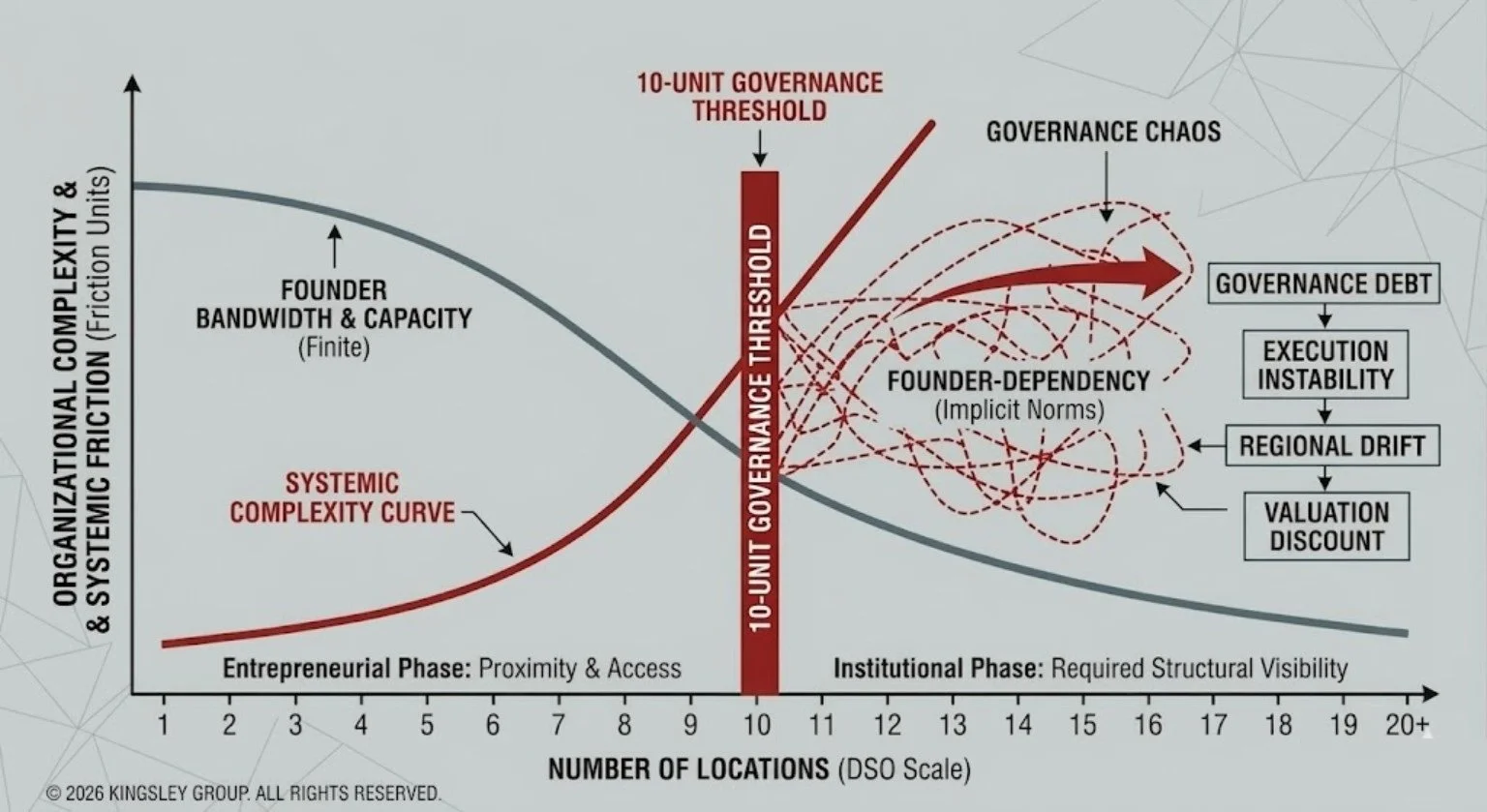
By the time an organization approaches roughly ten locations, leadership presence no longer extends far enough to carry the structure through personality, habit, or shared memory alone. What once felt like alignment begins to reveal itself as dependence on informal interpretation. At that point, the issue is no longer management capacity in the ordinary sense. It is governance visibility.
This is the threshold at which implicit governance begins to convert from convenience into structural risk.
Growth Changes the Physics of Authority
A smaller organization can operate for years on assumed understandings. Not because the structure is complete, but because its incompleteness remains temporarily masked by access to the founder, closeness among leaders, and short decision distance between the center and the edge.
As the organizational footprint expands, those conditions disappear.
The senior executive is no longer continuously visible to the operating system of the organization. Local leaders begin making judgments in the absence of clearly defined decision rights. Functional leaders interpret their remit differently across departments. Partners, operators, and clinical leaders may each believe they are acting appropriately while relying on entirely different assumptions about authority.
The absence of a crisis does not indicate the presence of a structure.
Yet the organization begins to experience a quieter form of strain: repeated clarifications, inconsistent escalations, duplicated conversations, delayed commitments, role overlap, and subtle political friction around who can decide what, when, and under what boundary conditions.
This is often misread as a people problem. More accurately, it is a structural visibility problem.
The issue is not simply that the organization has become larger. It is that authority has become less legible.
Figure 1.1 Governance Threshold Model — Relationship Between Founder Capacity and Organizational Complexity
The Founder Can No Longer Function as the Architecture
One of the least acknowledged transitions in a scaling organization is the point at which the founder ceases to be a sufficient carrier of institutional logic.
In the earlier period, the founder often serves multiple functions simultaneously: strategist, interpreter, cultural anchor, escalation point, exception handler, and final source of authority. This concentration can create speed in a contained environment. It can also create the impression that formal governance is unnecessary.
At greater scale, however, the same pattern begins to produce distortion.
The founder becomes the unofficial routing mechanism for unresolved questions. Teams wait for clarification rather than acting from structure. Leaders preserve alignment not through defined boundaries, but through repeated recourse to the same central figure. The organization continues moving, but only by repeatedly borrowing coherence from a person rather than deriving it from an institutional design.
Founder-dependency is not a leadership style; it is a valuation discount. When an organization requires the founder to stabilize every ambiguity, it possesses latent structural exposure that sophisticated investors will eventually price accordingly.
That model does not fail all at once. It erodes gradually.
The first signs are familiar: decisions revisited after they were thought to be closed, regional inconsistency disguised as local discretion, growing hesitation around cross-functional ownership, and executive fatigue that cannot be solved by effort alone. These are not random frictions. They are the visible symptoms of an authority system that has outgrown its informal carrying capacity.
At this stage, more communication is rarely the true remedy. The underlying issue is not insufficient discussion. It is insufficient structural definition.
The Real Cost Is Not Inefficiency, But Drift
Many organizations can tolerate a surprising amount of inefficiency. What becomes more dangerous at scale is drift.
Implicit governance functions as a form of governance debt. It allows organizations to move quickly in the early stages of growth, but as scale increases, the accumulated interest appears in inconsistent execution, regional drift, and executive fatigue.
When authority is not adequately defined, the organization does not remain neutral. It begins to develop localized interpretations of governance. Offices, functions, and leaders start filling structural silence with their own operating assumptions. Over time, those assumptions harden into unofficial norms.
The result is not merely variation. It is parallel governance.
One region believes a decision belongs to operations. Another assumes it belongs to clinical leadership. One partner expects strategic input as a right of position. Another experiences the same issue as outside scope. One leader escalates early; another acts first and explains later. In each case, the organization is no longer running on a shared architecture of authority, but on accumulated pockets of interpretation.
That condition is difficult to detect from the center until it becomes expensive.
By then, the symptoms are often mislabeled as execution weakness, cultural inconsistency, leadership misalignment, or poor accountability. Those descriptions may be partially true, but they tend to name the operational expression rather than the structural cause.
A governance problem that remains undefined is often managed as an interpersonal one.
That distinction matters. One invites repeated intervention. The other requires institutional clarification.
Ten Locations Is Not Merely a Larger Version of Three
A common scaling error is to assume that the next stage of growth is simply the earlier stage with more volume.
It is not.
A three-location group can still rely heavily on direct oversight, dense informal communication, and founder-mediated judgment. A ten-location group begins to require something qualitatively different: not just more leadership, but more visible structure beneath leadership.
This is the point at which executive teams begin to confront a more serious question than operational coordination. They begin to confront continuity.
Can the organization preserve coherence when the founder is absent from the room?
Can authority remain stable when more stakeholders are involved?
Can strategic decisions move without repeatedly returning to personality, memory, or exception handling?
Can the organization grow without requiring every important ambiguity to be manually resolved at the top?
These are governance questions before they are management questions.
An organization that cannot answer them structurally may continue to grow in footprint while weakening in institutional durability.
The Shift Is From Managing Activity to Defining Authority
The deeper transition at this threshold is philosophical as much as organizational.
Earlier-stage leadership is often built around oversight of activity. Later-stage leadership requires design of authority.
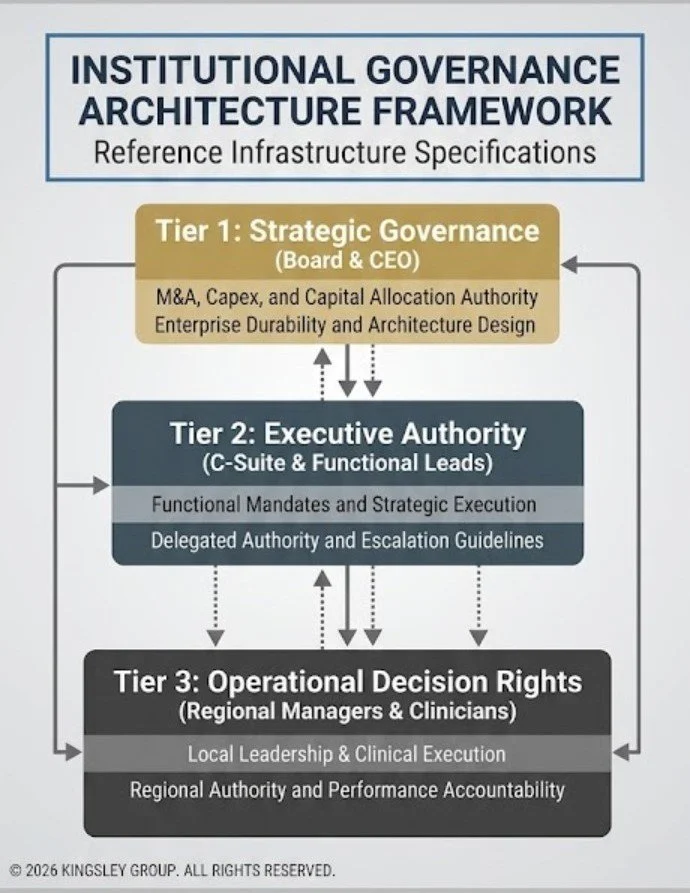
Figure 1.2 Institutional Governance Architecture Framework — Authority Layer Specification
That distinction is easy to miss because both can appear active from the outside. Yet they produce very different institutional conditions.
Managing activity keeps the center busy. Defining authority makes the center legible.
The former tends to increase executive dependence. The latter reduces it. The former solves issues one by one. The latter establishes the boundaries within which issues can be resolved without recurring structural confusion.
This is where governance architecture becomes relevant—not as advisory language, and not as operational instruction, but as executive reference infrastructure.
Its function is not to run the organization. Its function is to make the organization’s authority design visible enough to withstand scale, leadership evolution, and increasing complexity.
Where implicit governance relies on interpretation, governance architecture establishes reference. Where growth creates ambiguity, architecture establishes boundary. Where institutional memory begins to fragment, architecture preserves continuity beyond the individuals currently occupying leadership roles.
That is not a cosmetic distinction. It is a shift in organizational form.
Structural Maturity Is Increasingly a Durability Question
As organizations become more complex, durability matters as much as momentum.
In institutional investment environments, governance architecture becomes a critical determinant of enterprise durability. Organizations whose authority structures depend heavily on founder interpretation or informal norms may still perform operationally, but they introduce structural uncertainty into leadership continuity, decision stability, and strategic execution. For investors and institutional partners, that uncertainty can translate into increased diligence scrutiny and, in some cases, a discount in perceived enterprise value.
This is particularly true in periods of partnership expansion, leadership transition, ownership succession, or investment scrutiny. In such conditions, the strength of the enterprise is no longer judged solely by production, growth rate, or footprint. It is judged by whether authority remains coherent under pressure.
For organizations operating in partnership structures or under private equity ownership, governance clarity increasingly influences perceived enterprise durability.
A business can present scale externally while remaining structurally fragile internally.
Where authority depends too heavily on a founder, where decision rights remain ambiguous, or where accountability boundaries have not been clearly codified, institutional continuity becomes harder to defend. The organization may still perform. But it does so with latent structural exposure.
That exposure rarely announces itself in advance. It tends to surface at moments of stress: disagreement among principals, delayed strategic action, inconsistent regional execution, failed integration, or leadership turnover that reveals how much of the operating logic was never truly institutionalized.
The important point is not that every group at this stage is in crisis. Many are not. The point is that the absence of visible governance architecture becomes increasingly consequential as the cost of ambiguity rises.
The Threshold Should Be Read Correctly
The ten-unit threshold should not be understood as a rule or a formula. It is better understood as an organizational signal.
It marks the stage at which informal governance often begins to lose reliability as a primary mechanism of coherence. It marks the point at which proximity no longer compensates for undefined authority. It marks the point at which continued growth begins to place more weight on institutional design than on founder endurance.
For some organizations, this recognition arrives earlier. For others, later. But once the pattern becomes visible, it is difficult to unsee.
What had once felt like entrepreneurial flexibility begins to look more like structural exposure. What had been described as agility may, under pressure, prove to be dependency on unwritten rules. And what had seemed like strong leadership may turn out to be the repeated manual stabilization of a system whose authority logic was never fully made explicit.
That is why the issue deserves to be named carefully.
Not as a failure of effort.
Not as a failure of talent.
Not even, in the first instance, as a failure of execution.
But as a shift in structural requirements.
At a certain scale, implicit governance is no longer lean, adaptive, or entrepreneurial.
It becomes institutional risk.
For organizations approaching this stage of structural complexity, governance architecture increasingly functions as executive reference infrastructure — a documented authority design used internally by leadership teams to maintain clarity as organizations scale.
In practice, these references function as the internal authority map used by leadership teams to clarify decision rights, escalation pathways, and accountability boundaries as organizational complexity increases.
Institutional Audit: The 10-Unit Governance Diagnostic
Purpose
This brief diagnostic is designed to help executive teams assess whether governance structures have transitioned from informal founder interpretation to institutional authority design.
Organizations approaching or exceeding the ten-location threshold frequently discover that decision logic exists primarily through memory, proximity, or founder interpretation rather than through visible governance architecture.
The following questions evaluate whether key authority domains are implicit or explicit within the organization.
Instructions
For each governance domain below, indicate whether the rule currently exists primarily as:
Implicit
The authority exists through founder interpretation, habit, or informal understanding.
Explicit
The authority has been formally documented within the organization’s governance architecture and is visible to leadership.
Governance Domain Assessment
1. Capital Allocation Authority
Definition of who holds final authority over:
• capital investments
• facility expansion
• equipment purchases
• strategic reinvestment decisions
[ ] Implicit
[ ] Explicit
2. Regional Management Autonomy Boundaries
Clarity regarding what regional or office-level leadership may decide independently versus what must be escalated.
Examples include:
• staffing structure changes
• operational process changes
• pricing or vendor selection
• operational policy interpretation
[ ] Implicit
[ ] Explicit
3. Clinical Escalation Pathways
Formal definition of how clinical concerns escalate across leadership layers.
Examples include:
• patient safety escalation
• clinical standard interpretation
• dispute resolution between clinical and operational leadership
• authority hierarchy for clinical decision arbitration
[ ] Implicit
[ ] Explicit
Diagnostic Observation
If two or more domains are marked “Implicit,” the organization is likely operating with meaningful Governance Debt.
Governance debt typically produces:
• repeated executive clarification cycles
• inconsistent regional execution
• delayed strategic decisions
• founder dependency for routine ambiguity resolution
At scale, these conditions gradually convert into structural friction and institutional risk.
Institutional Note
This diagnostic does not provide operational guidance.
Its purpose is to help executive teams identify whether authority logic is institutionally visible or informally interpreted.
Organizations approaching the ten-location threshold often discover that continued growth requires governance architecture that extends beyond founder interpretation.
Kingsley Group
Institutional Governance Architecture Research
© 2026 Kingsley Group. All Rights Reserved.
Looking for the Full Framework?
The 10-Unit threshold is a specific inflection point. For a broader orientation to our complete Institutional Governance Framework, request access to the Executive Governance Brief